
Imagine you want to read a book, a label, a bus timetable — and the only way to get it in braille is a machine that costs more than a used car.
That is the gap braille readers live with. A commercial braille embosser — the machine that presses raised dots into paper so a reader can feel the words — can cost upwards of US$2,500. For a small school, a community library, a makerspace in a country at the end of a long supply chain, that price puts braille out of reach. And without the machine, there is no braille: no books, no labels, no documents in the reader’s own language.
BrailleRap is the maker’s answer to that gap — and it is the biggest build in this whole series.
It is an open-source braille embosser built from a repurposed 3D printer: 3D-printed parts, stepper motors, a solenoid, and a freely available manual. It presses dots into a sheet instead of depositing ink, so the text can be read by touch. The project was started in 2018 by two French makers from the FabLab community, and it is licensed under CERN-OHL-P V2.0 — anyone can build it, adapt it, and even sell it. The GIG article puts the build at around US$350, against US$2,500 and more for a commercial machine. And it is, as far as anyone has found, the only open-source braille embosser you can actually replicate yourself, step by step, from a manual.
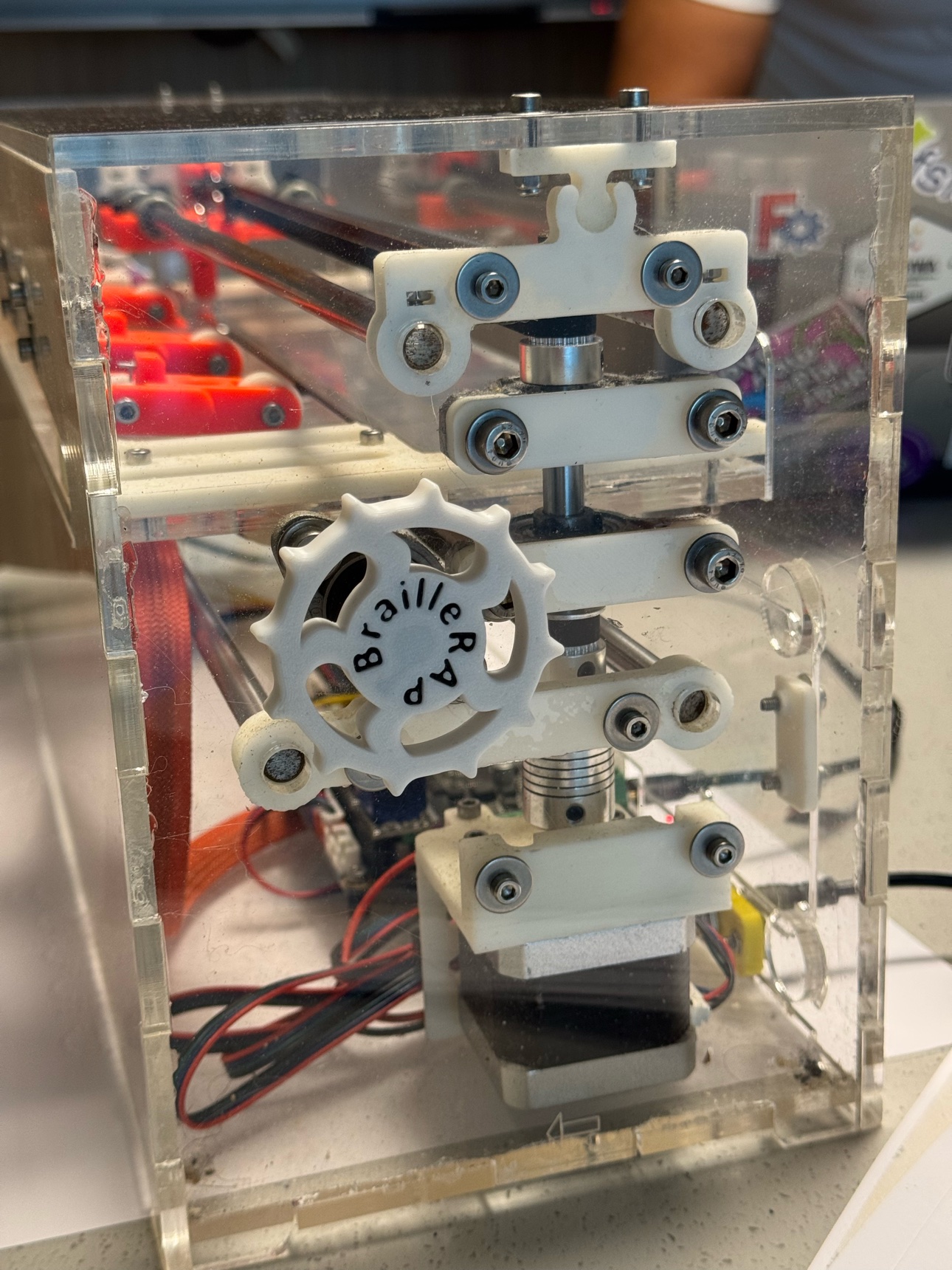
That last point is the whole story. BrailleRap is not a product you buy. It is a machine you build — and building it is itself the knowledge transfer.
Saad’s path to it runs through Bhutan. In 2023, at Fab23 in Bhutan, the global Fab Lab gathering, he met staff and students from FabLabCST — the Fab Lab at the College of Science and Technology in Phuentsholing. They were working on two things that seemed unrelated: recycling aluminium from drink cans, and support for students with visual impairments. BrailleRap, it turned out, connected both: the same machine could emboss braille onto aluminium sheets made from recycled drink cans. One build closed a material loop and an accessibility gap at the same time.
Back in Singapore, he built BrailleRap SG — the first in the country — at SalvageGarden, and is now working on the third machine. The machine has travelled since: the Bhutan build was presented at re:publica 2024 in Berlin, and Saad has taken BrailleRap to BuildPeace 2024 in Manila, FabCity Hamburg, FOSSASIA 2025 and Dinacon Bali. At each stop the goal was the same — demonstrate that building the machine is the learning, not a prelude to it. Each build is an occasion for local makers, disability practitioners and community members to work through the same process together.
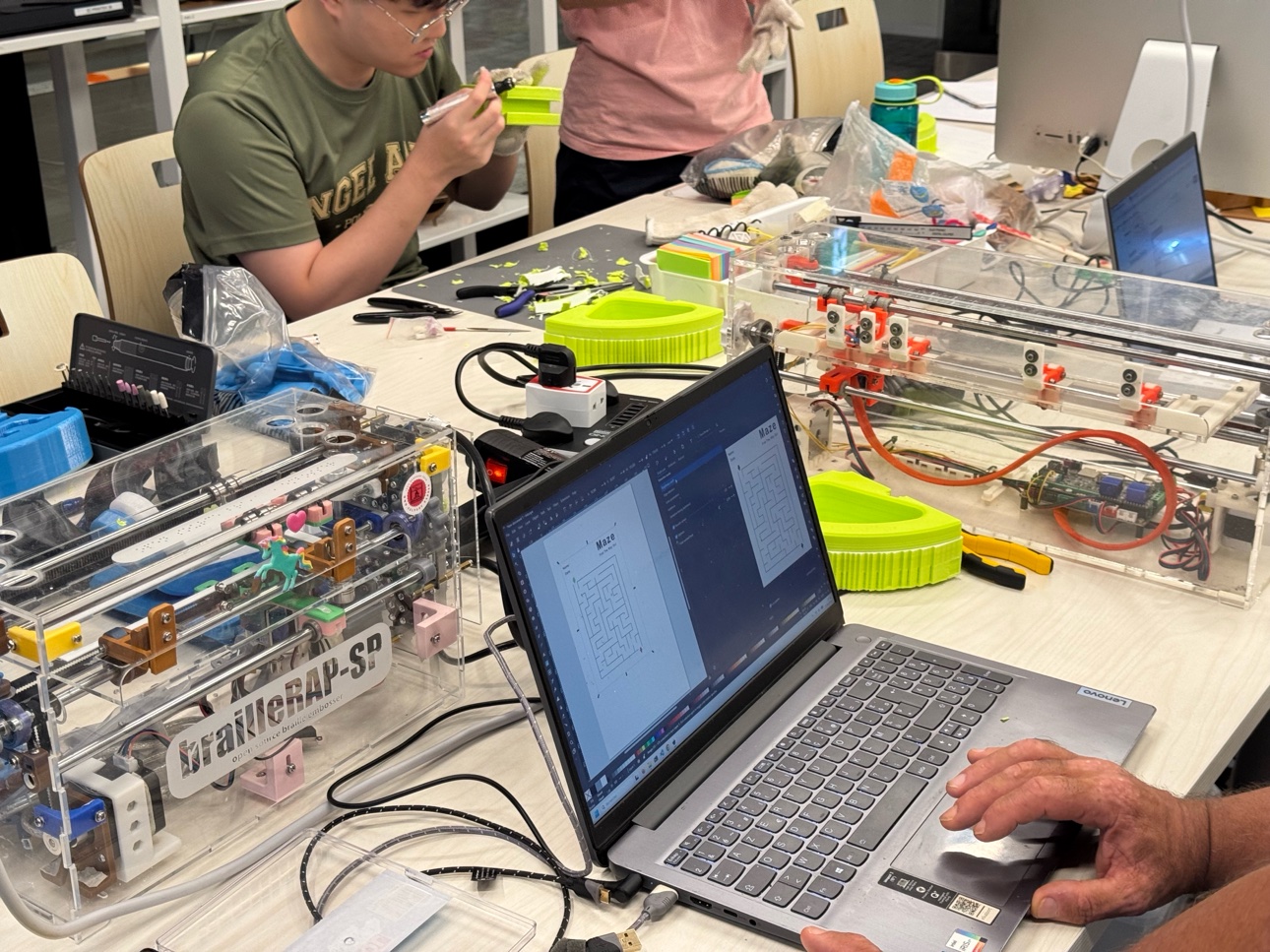
And it is already doing the small, everyday work back home. SalvageGarden exhibited the embosser at the TechAble Enabling Lives Festival in December 2025, showing 3D printing in action alongside it. One volunteer tested it by embossing braille onto a reshaped recycled can — the Bhutan idea, tried out in Singapore, on a piece of rubbish that would otherwise have been thrown away.
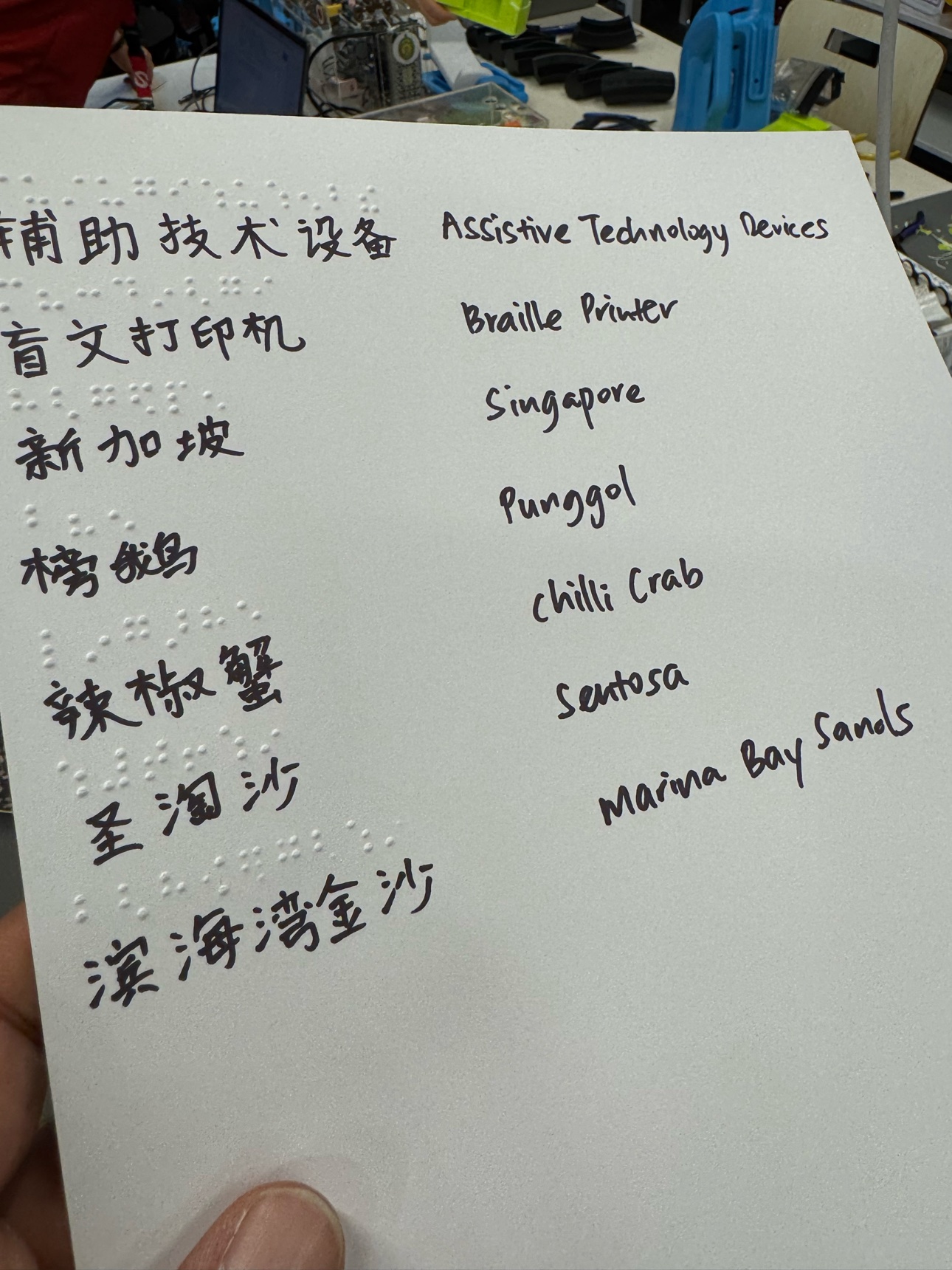
That is what a maker can do that a catalogue cannot: build the machine that makes the access, instead of waiting for someone to sell it to you at a price you cannot pay. A printer that prints braille. A can that becomes a page. And a manual, free to download, that means the next builder does not have to start from zero.
So if you know a school, a library or a community that needs braille and cannot afford the machine — the files are there, and the manual is there. Come to a session, watch a BrailleRap press its first dots, and see what it feels like when a book starts to exist where there was not one before.
What a maker can do
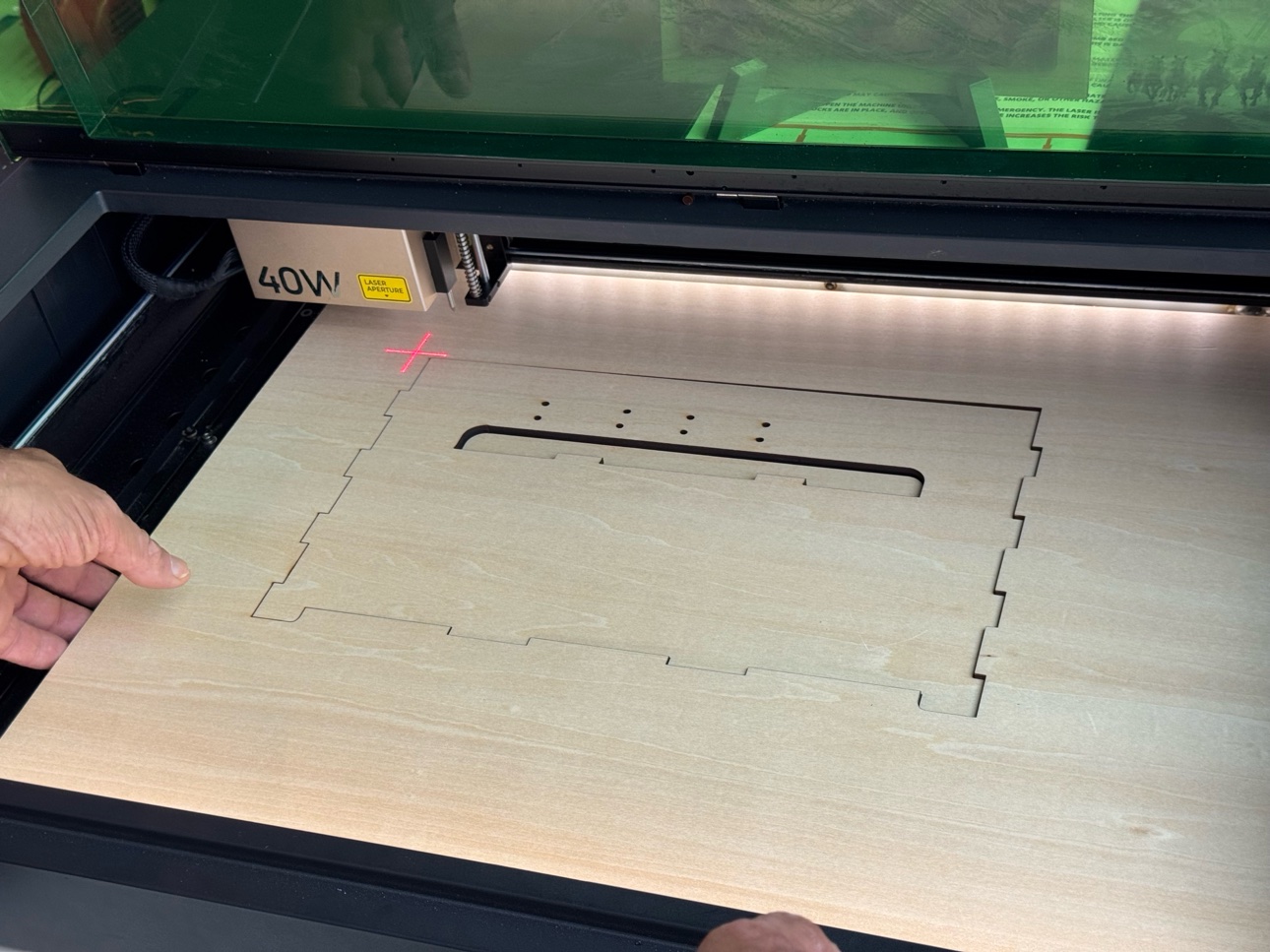
- Build one — the manual is the whole point. The building manual, firmware (based on Marlin), STL files for the 3D-printed parts, and the AccessBrailleRAP / DesktopBrailleRAP translation software are all available via the main BrailleRap repository — see Sources. Follow the manual step by step; that is how every BrailleRap so far has been built, including the ones in Bhutan and Singapore.
- Emboss more than paper. BrailleRap presses dots into 160g paper, thin metal and plastic sheet — try the recycled-can test the volunteers tried: reshape a can, emboss braille onto it, and feel what a discarded object becomes.
- Make a tactile map, not just a text. The translation software connects to LibLouis for braille translation and supports embossing text and vector graphics — including tactile maps extracted from OpenStreetMap. A map a blind reader can feel is a different kind of access from a paragraph.
- Teach the build, not just the machine. Every BrailleRap build is a workshop in itself: makers, practitioners and community members working through the same process. If you can run a 3D printer, you can start — and a braille reader should be in the room to validate the build.
Sources
- Braille embosser at TechAble — @salvagegardenmakerspace, 4 Dec 2025
- Recycled-can test print — @salvagegardenmakerspace, 2 Oct 2024
- Second braille printer coming — @salvagegardenmakerspace, 25 Nov 2024
- From Bhutan to Singapore: spreading an open-source Braille printer across Southeast Asia and to the world — Ricardo Ruiz, GIG, 15 June 2026. Build cost around US$350 vs commercial upwards of US$2,500; project started 2018 by two French makers, CERN-OHL-P V2.0; Saad built BrailleRap SG, the first in Singapore, and is now working on the third machine; Fab23 Bhutan / FabLabCST aluminium-recycling connection; re:publica 2024, BuildPeace 2024 Manila, FabCity Hamburg, FOSSASIA 2025, Dinacon Bali.
- BrailleRAP — braillerap.org. Open-source braille embosser; A4 version and BrailleRAP XL (A3); CERN-OHL-P V2.0; OSHWA-certified open-source hardware.
- BrailleRAP Resources — braillerap.org. Building manual, laser-cutting files, STL files for 3D-printed parts, AccessBrailleRAP and DesktopBrailleRAP software, OpenStreetTouch tactile-map tool — all via the BrailleRap GitHub repository.