
Looking for a fun and accessible tabletop game? Look no further than M4tch, a 3D printed version of Connect Four that's perfect for players of all abilities! Not only is…
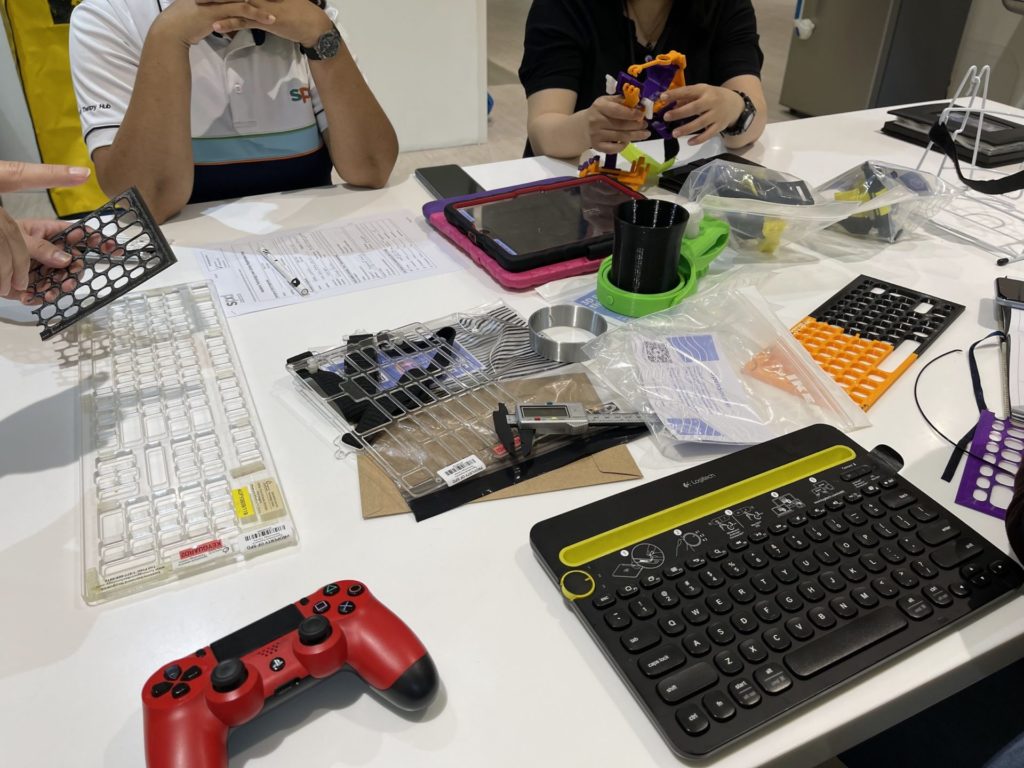
Where We Are:
Punggol Regional Library Level4 (Make IT @ PRL)

Bespoke Assistive Devcies
Inclusive design involves the user and caregiver in the design process. Assistive devices need to be designed for affordability.
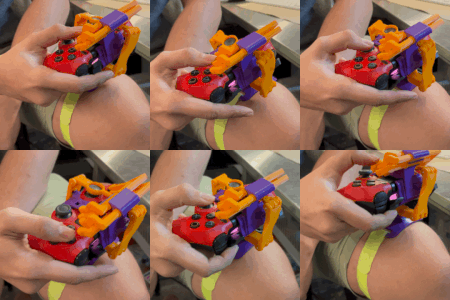
Opensource 3D printable designs
3D printables are infinitely customisable, work with us to get started with co-creating custom designs
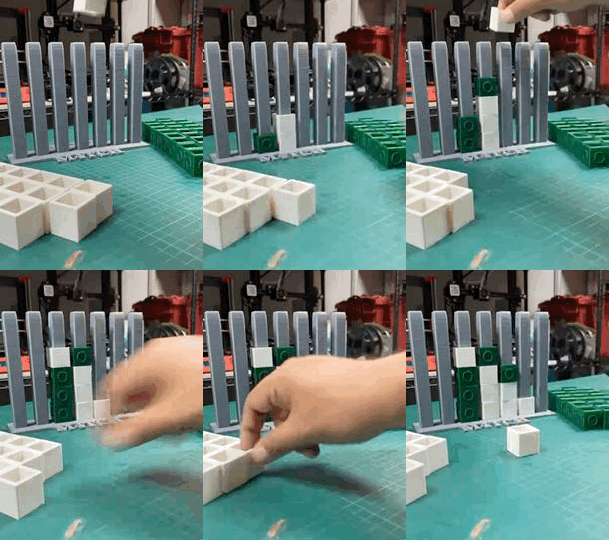
Co-created inclusive games
Tactile games for persons with visual impairments, and other fun yet meaningful applications of 3D printing
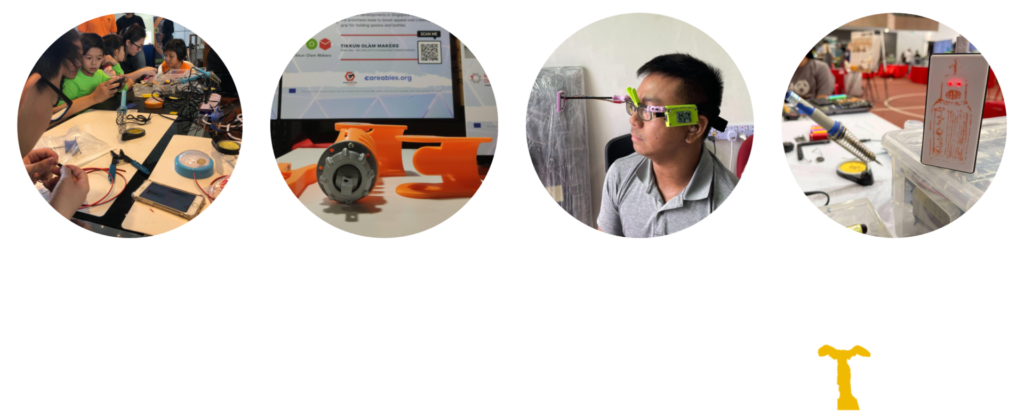
What We Do
Learning by doing in a community makerspace, makers gain a comprehensive understanding of materials and objects around them.
Hold Space to engage caregivers and persons with disabilities in the co-creation of assistive devices. "Nothing about us, without us"
Salvaging working components, reducing e-waste. Engaging the community and industry players via discussions with a socially conscious outlook.
Document and share open processes, technologies, and product designs.
Build, engage, and maintain a community of Makers in Singapore, Southesast Asia (SEA), and globally.
The first Assistive Tech Makerspace in Southeast Asia.
Community Makerspace focused on Assistive Tech, low-cost bespoke solutions for persons with disabilities, and openSourced hardware. Participatory space for self driven learning-by-doing. Makers of TechForGood.
SalvageGarden: Empowering Accessibility Through Co-Creation
SalvageGarden Ltd. is a dedicated, volunteer-led Assistive Technology (AT) Makerspace founded on the principle of “People-first design.” Our mission is to challenge the high cost and limited personalisation of traditional AT by developing affordable, open-source, and locally manufactured solutions. Operating from the Punggol Regional Library in Singapore, we run weekly “Critical Making” design sessions. These sessions bring together people with disabilities (PwDs), caregivers, makers, designers, and clinicians in a collaborative environment where digital fabrication tools like 3-D printers are used for hands-on prototyping. To date, this community-driven approach has yielded over 100 public participatory design workshops and established an open-source library of over 140 designs downloaded globally, showcasing the power of our TECH FOR GOOD ethos and our commitment to a DIWO (Do It With Others) approach.
Crucially, caregivers are recognised as essential partners in our design process, providing invaluable insight that ensures devices are practical for both the user and the daily support system. By directly involving caregivers, we ensure that our low-cost, open-source solutions are not only user-driven but also integrate seamlessly into daily routines, making them genuinely effective and sustainable. This commitment to full participatory design, which includes the lived experiences of PwDs and their support networks, is key to our success. Since its inception in 2020 by Saad Chinoy & LJ Jang, SalvageGarden has mobilised over 40 volunteers, building a robust ecosystem that drives accessible innovation and truly understands the needs of the entire disability community.
